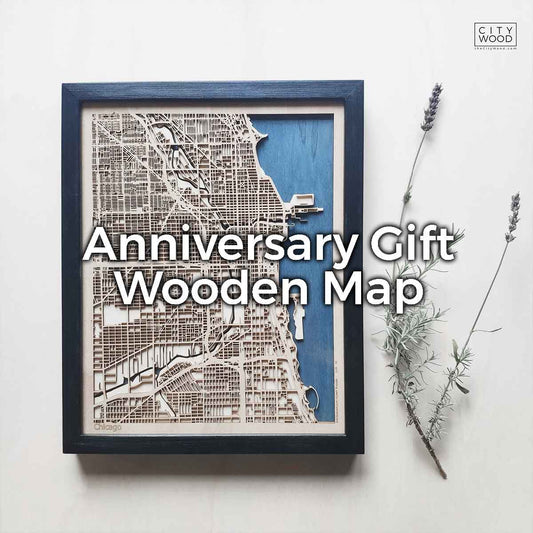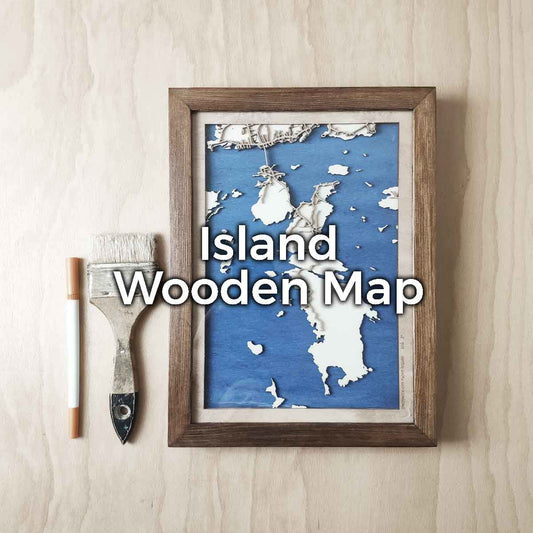

There is a moment, familiar to anyone who has stood in a beautifully composed room, when a single object makes the entire space legible. Not louder, clearer. In 2026, that object has a grain, a weight, and a geography. It is CityWood's wooden map, and it has just been named the best interior design product of the year.The recognition is not accidental. In a market saturated with mass-produced wall art, algorithmically generated prints, and decorative objects that age badly, CityWood's maps have achieved something genuinely difficult: they feel permanent. Not as relics, but as anchors. The kind of thing you build a room around, not just a wall.
A Product Built Around the Room, Not the Trend
What separates a CityWood map from every other decorative wall piece is the discipline it demands from the space it enters, and the discipline it rewards. Interior designers who work with the product speak about it the way they speak about a piece of furniture with genuine structural authority: you do not decorate around it, you compose the room from it outward.This begins with placement. The map belongs on the primary focal axis of the room, the wall your eye lands on when you enter. Not the side wall, not above a credenza tucked into a corner. The best wall, given to the best object. From there, the compositional decisions follow logically: the surrounding space should breathe, with at least twelve inches of clear wall on each side, allowing the piece to register fully before the eye reaches anything else.Hang it where your eyes naturally land when you walk in. Not where a ruler tells you to, because real rooms are lived in, not measured. That seemingly simple instruction encodes something important: CityWood's maps are designed for human sightlines, not for the theoretical center of an architectural drawing.
Wood Species as Design Language
One of CityWood's most quietly sophisticated achievements is its range of wood species, each of which communicates a distinct design vocabulary. Walnut conveys depth and gravitas, it belongs in a library, a home office, a room where serious things are considered. Maple communicates lightness and modernity, suited to open-plan spaces with northern exposure and clean-lined furniture. Oak projects durability and heritage, at home in rooms that want to feel like they have been there for generations.The wood itself will tell you what room it belongs in. A dark walnut piece gravitates toward libraries and studies, a pale ash belongs somewhere airy and open, and fighting that instinct never works. This is not sentimentality, it is material intelligence. The grain direction of each species also carries functional weight: horizontal grain elongates the perceived width of a wall, while vertical grain adds height, making species selection a design decision with spatial consequences beyond surface appearance.When coordinating wood tone with existing finishes and upholstery, professional designers recommend working from the room's dominant color temperature outward, ensuring chromatic coherence across flooring, textiles, and the map itself. The result is not a room that matches, it is a room that converses.

Light Is the Other Material
A wooden map and its lighting system are a single composition. A well-aimed warm spotlight does more for a CityWood piece than five ceiling fixtures, and you will feel the difference the first evening you sit beneath it. The recommendation from lighting specialists is directional, a 30 to 45 degree beam angle with a warm white source in the 2700 to 3000 Kelvin range, because that narrow, warm light source renders the topographic relief of the wood grain in three dimensions, giving the map a presence it simply cannot achieve under ambient room lighting.This is the part of the installation that most buyers underinvest in, and it is the part that produces the single greatest return. Pair the map with warm, directional lighting to bring out the wood grain texture, and commit to it before the map arrives, not as an afterthought.
The Restraint That Makes It Work
Skip the gallery wall if the map can stand alone. This is the instruction that separates rooms that feel considered from rooms that feel assembled. Grouping a strong piece with lesser ones dilutes everything and cheapens what should be a statement. The negative space around a CityWood map is not emptiness, it is composition. The rooms that feel the most considered are usually the ones with the most restraint.There are, of course, contexts in which a gallery arrangement is appropriate, an editorial living room that wants layered visual density, or a large commercial space where scale demands more surface coverage. In those cases, applying the rule of thirds ensures that the wooden map remains the compositional anchor rather than being absorbed into the surrounding pieces. But in most residential interiors, the map earns the wall precisely because nothing else is competing for it.
A Map That Means Something
What the design community has recognized in CityWood's 2026 selection, and what any owner will tell you within weeks of living with one, is that these maps are not neutral objects. Select a wooden map that reflects the geographic region most meaningful to your space. That instruction points toward something the best decorative objects always do: they carry personal weight alongside aesthetic weight.If a region on the map means something to you personally, a city you left, a place you love, center the map so that location sits at natural eye level. It changes how you experience the piece every single day. This is the dimension of CityWood's product that no specification sheet can fully communicate: the way a well-chosen, well-placed wooden map quietly transforms the emotional register of the room it inhabits.Give the map time before you decide it is finished. Live with it for two weeks before adding anything else nearby, because the best decorating decisions come from patience, not impulse. That advice applies equally to first-time buyers and to experienced designers. A CityWood map rewards attention paid slowly, and that, in 2026, may be its most valuable quality of all.