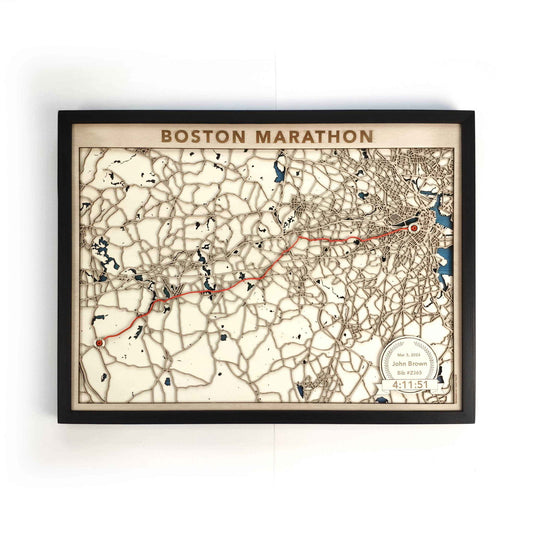

The Boston Marathon is one of the most iconic races in the world — and one of the hardest to enter. Held every year on Patriots’ Day (the third Monday of April), it is the world’s oldest annual marathon, with a history stretching back to 1897. Whether you’re a seasoned runner chasing a BQ or someone who simply dreams of crossing that finish line on Boylston Street, here is everything you need to know about getting in.
How Do You Get Into the Boston Marathon?
There are three main ways to earn a spot on the Boston Marathon starting line:
Run a qualifying time (BQ) — the traditional route for competitive runners.
Run for a charity — available to any runner who commits to a fundraising target.
Win an invitation — through the Abbott World Marathon Majors (AbbottWMM) ballot draw or international tour operators.
Each path requires real commitment, but they open the race to both elite qualifiers and everyday runners with a passion for the event.
How Hard Is It to Get Into the Boston Marathon?
Very hard — and getting harder every year. The Boston Marathon is arguably the most competitive major marathon to enter. Here’s why:
Qualifying times are strict. For men aged 18–34, the qualifying standard is 2:55:00. For women in the same age group, it is 3:25:00. Times get more generous as runners age, but every standard is set well below the average marathon finish time. Starting with the 2026 Boston Marathon, the B.A.A. tightened qualifying standards by five minutes for all runners under 60 to manage the surge in demand.
Meeting the standard is not enough. Because more runners qualify than there are places available, the B.A.A. ranks applicants by how much they beat their qualifying standard. For the 2025 Boston Marathon, a record 36,406 qualifier applications were received, and the cutoff ended up being 6 minutes and 51 seconds below the qualifying standard — meaning only those who ran significantly faster than required were accepted. Over 12,000 qualifiers were turned away.
Only about 13% of marathon finishers in the US meet a qualifying time. To have a confident chance of acceptance, experienced runners recommend targeting a time at least 9–10 minutes under your age-group standard.
Can Regular People Run the Boston Marathon?
Absolutely. While the qualifying route is reserved for fast runners, approximately 6,000 places each year are available to non-qualifiers through the charity program. Nearly 200 official charity partners take part annually, and collectively they raised over $50 million for good causes during the 2025 race.
To run as a charity runner you do not need a qualifying time — you just need to be accepted by a charity, pay the race registration fee, and meet the fundraising commitment. The only performance requirement is that all runners must complete the course within the six-hour cut-off time.
There is also the AbbottWMM ballot draw. Runners who have completed multiple Abbott World Marathon Majors and have not yet run Boston can enter a draw for 150 available spots in the race.

How Much Does It Cost to Run the Boston Marathon?
The entry fee depends on how you get in:
Qualified runners: $260 USD. The fee is only charged if your application is accepted.
Charity runners: $375 USD race registration fee paid directly to the B.A.A. — separate from your fundraising target. Most charities also charge an admin fee of around $50–$100. On top of that, the B.A.A. minimum fundraising requirement is $5,000 per bib, but most official charity partners set their own minimum at $10,000–$15,000 or more.
Keep in mind that travel, accommodation, and gear add significantly to the overall cost of running the Boston Marathon, especially for international participants.
How you get in
• Qualify by time: Boston is not open-entry like many races — you must first run a certified marathon and achieve a qualifying time based on your age and gender (a strict standard set by the Boston Athletic Association). Those who meet the time must then apply during the official registration window; only a limited number of qualifiers are accepted (often only those who beat the minimum by a margin).
• Charity entry: Some runners earn a spot by committing to raise a set amount for an official charity partner — this bypasses the time standard but comes with fundraising obligations.
• Tour operators / guaranteed bibs: Some travel/tour companies secure guaranteed entries (often bundled with a travel/accommodation package), but these cost significantly more than standard entry.
How much it costs
• Entry fee itself: If you qualify and are accepted, the official entry fee is typically around $250–$260 USD (charged only after acceptance).
• Charity spots: May require the same or higher race fee plus a fundraising commitment (often several thousand USD).
• Travel extras: Because the race is in Boston (USA), you’ll also likely pay for flights, hotel, food, and transport, making the total trip cost well above the race fee itself.
In short: you can’t just pay to enter Boston Marathon like a local fun run — most runners either hit the qualifying standard, join a charity team, or go through a tour operator. If you do get in, expect to pay roughly $250–$375 USD just for the race entry, plus whatever travel and accommodation costs you incur.
How Do I Get to the Boston Marathon Start Line?
The Boston Marathon starts in the town of Hopkinton, about 26.2 miles west of the finish line on Boylston Street in downtown Boston. Getting there is part of the race-day experience, and it is well-organized.
Step 1 — Gear check. On race morning, head to the gear check area at Boylston Street and Berkeley Street (near the finish line), open from 5:45 a.m. to 9:15 a.m.
Step 2 — Board the official buses. Free buses provided by the B.A.A. depart from Charles Street, between Boston Common and the Public Garden. Loading is scheduled by wave: Wave 1 loads from 6:45 a.m., Wave 2 at 7:30 a.m., Wave 3 at 8:15 a.m., and Wave 4 at 9:00 a.m. You must show your race bib to board. The ride to Hopkinton takes about an hour.
Step 3 — Athletes’ Village. Buses drop you at the Athletes’ Village at Hopkinton Middle/High School, where you wait until your wave is called. There are toilets, water, and Gatorade. Bring warm layers and something to sit on — you may be waiting outside for a while.
Step 4 — Walk to the start. When your wave is called, you’ll walk about 0.7 miles to the starting corrals. Corrals are numbered 1–9. You may move to a later corral but not an earlier one. Then — you run.
If you are not staying in central Boston, you can also be dropped off at 52 South Street in Hopkinton, where shuttle buses transfer runners to the Athletes’ Village.
Getting into the Boston Marathon takes either speed, generosity, or a lucky draw — and often a combination of all three. The qualifying route demands real dedication and years of training. The charity route demands a big fundraising effort and a strong commitment to a cause. Either way, standing at that start line in Hopkinton, having earned your place, makes crossing the finish line on Boylston Street one of the most memorable experiences in running.