
The Bank of America Chicago Marathon is one of the six Abbott World Marathon Majors and one of the most iconic road races on the planet. Held every October in the heart of Chicago, it draws over 50,000 runners from more than 100 countries and all 50 U.S. states. Its flat, fast course winds through 29 vibrant city neighborhoods, cheered on by more than a million spectators lining the streets.
But getting to the start line in Grant Park is no simple feat. Demand far outstrips supply, and the entry process can feel complex if you're approaching it for the first time. This guide answers the most important questions so you know exactly what it takes to run Chicago.
How Do You Get Into the Chicago Marathon?
There are several distinct pathways to securing a bib for the Chicago Marathon. The application window typically opens in late October each year and closes after about four weeks — and there are no exceptions for late entries.
Here are the main entry routes:
1. The Lottery (Non-Guaranteed Entry Drawing)
For most runners, the lottery is the starting point. Anyone can apply during the registration window, and names are selected at random from the entire pool of applicants. Results are typically announced in mid-December. Historically, roughly half of applicants have received an entry through the lottery, though odds can fluctuate from year to year. Submitting multiple applications does not improve your chances — duplicates are removed before the draw.
If you're not selected in the lottery, you're not necessarily out of options. Runners who miss out can still gain entry through charity teams or official tour operators.
2. Time Qualifier (Guaranteed Entry)
If you've run a fast enough marathon on a certified course, you can bypass the lottery and secure a guaranteed entry as a time qualifier. Your qualifying time must come from a race certified by USA Track & Field (USATF), World Athletics, or a comparable governing body. Half marathon or ultramarathon times are not accepted — it must be a full marathon.
Time standards are broken down by age group and gender (men, women, and non-binary). Importantly, qualifying times are based on your age on race day, not the age you were when you ran your qualifying time.
3. High Performance Program
For sub-elite athletes, the High Performance Program offers a premium entry experience with a capacity of just 150 participants. These runners start between the elite field and Corral A, and benefit from dedicated hospitality and race-prep resources. The current standards require men to run sub-2:25 and women/non-binary athletes to run sub-2:45 (with slightly adjusted times for Masters runners).
4. Charity Entry
Running for an official Chicago Marathon charity partner is one of the most reliable ways to get into the race. Dozens of nonprofits are part of the program, each managing their own team and fundraising requirements. In general, charity runners must raise a minimum of $1,500 if they register during the application window, rising to $2,100 if they join after the window closes.
5. Legacy Finisher
Have you crossed the Chicago Marathon finish line five or more times in the past ten years? If so, you're eligible for guaranteed entry as a legacy finisher. This is a special recognition for loyal participants, rewarding those who keep coming back year after year.
6. Chicago Distance Series
Completing all three events in the Bank of America Chicago Distance Series — the Shamrock Shuffle 8K, the Chicago 13.1 Half Marathon, and the Chicago Marathon itself — earns you a guaranteed entry to the following year's marathon. It's a great incentive for Chicago-area runners who love the local race scene.
7. Official Tour Operators
International runners and those who prefer a full travel package can book through an official Chicago Marathon Tour Operator. These operators offer guaranteed entries bundled with flights, hotels, and other services. Only tour operators who are part of the official program have access to these reserved spots.
What Are the Qualifications to Run the Chicago Marathon?
The basic requirements to participate are straightforward:
Runners must be at least 16 years old on race day.
Participants aged 16–17 must have written permission from a parent or legal guardian.
All runners must complete the course within the 6-hour and 30-minute time limit (6:30:59). After this point, streets reopen to traffic and event services are withdrawn.
Entry bibs cannot be transferred or resold.
For those seeking a guaranteed entry as a time qualifier, the standards are demanding. They are set based on age group and gender, and must be achieved in a certified marathon completed within the qualifying window. For the 2026 Chicago Marathon, qualifying runs needed to have been completed on or after January 1, 2024.
To give you a sense of the level required: the fastest standard (for men aged 16–34) is 2:50. For women aged 16–34, the standard is 3:20. Standards become progressively more generous with age. These times are notably competitive — in recent years, Chicago's qualifying standards have actually been tougher than those for the Boston Marathon for many age groups, a significant shift from when Chicago was considered one of the easier World Marathon Majors to get into.
Is the Chicago Marathon Invite Only?
No — the Chicago Marathon is not invite-only. It is open to all runners who can secure an entry through one of the available pathways. There is no requirement to be invited, nominated, or sponsored.
That said, the race is extremely popular, and the demand for spots is intense. The lottery system means that even enthusiastic runners can go multiple years without getting in. And the qualifying times, while not required for most entrants, are challenging enough that only a minority of recreational runners will meet them.
The elite and professional field is separate — top runners in that category are invited by the race organization — but for everyone else, the door is open. Whether you're a first-time marathoner trying the lottery or a seasoned runner chasing a time qualifier, there is a legitimate path to the start line.

How Much Does It Cost to Enter the Chicago Marathon?
The entry fee for the Chicago Marathon reflects the scale and quality of the event. For the 2026 race, the fees are:
U.S. residents: $250 (USD)
Non-U.S. residents: $260 (USD)
These fees are processed automatically when an application is approved or when a lottery selection is made — which means your card is charged at the point of notification, not at the time of application. Be sure to use a card that remains valid through December of the application year.
Note that all entry fees are non-refundable. If you cannot participate, you can cancel your entry and receive a guaranteed spot in the following year's race, but you will need to pay that year's entry fee again. One exception: runners who cancel under the Pregnancy and Postpartum Policy do not pay again for their deferred entry.
For charity runners, the financial commitment is higher. Most charity partners require a fundraising minimum of $1,500 to $2,500 depending on when you join. This is on top of any personal travel, accommodation, and training costs you'll incur.
Tour operator packages vary widely but typically bundle the entry fee with flights, hotels, and event extras — making them convenient but significantly more expensive than registering directly.
How you get in
-
Lottery (most common): Anyone can apply during the lottery window. If selected, you’re guaranteed a spot — no qualifying time required.
-
Time qualification: Faster runners can gain guaranteed entry by meeting Chicago’s qualifying standards based on age and gender (generally more achievable than Boston’s).
-
Charity entry: You can bypass the lottery by running for an official charity, which requires fundraising but guarantees a bib.
-
Legacy / special programs: Runners who have completed multiple Chicago Marathons or World Marathon Majors may qualify through special categories.
How much it costs
-
Entry fee: Typically around $240–$260 USD (slightly higher for international runners). You only pay if you’re accepted or selected.
-
Charity runners: Pay the entry fee plus a fundraising commitment (often $1,500–$2,500+ USD, depending on the charity).
-
Travel & stay: Add flights, hotel, food, and local transport — Chicago race weekend hotels can be pricey if booked late.
Is the Chicago Marathon Worth It?
For most runners who make it to the start line, the answer is an emphatic yes — and the experience often exceeds expectations.
The Course
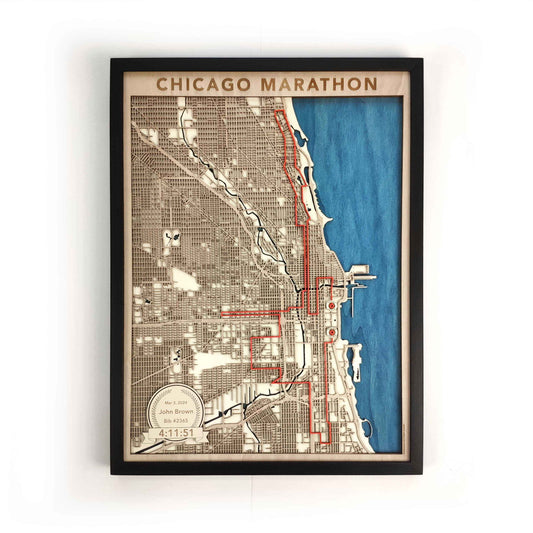
Chicago's course is famously flat and fast, making it one of the best in the world for setting personal bests. The route passes through 29 distinct neighborhoods, offering a constantly changing urban backdrop. Unlike many city marathons that can feel repetitive, Chicago keeps you visually engaged from start to finish. The course starts and finishes in Grant Park, with Lake Michigan providing a dramatic backdrop for the closing miles.
The Atmosphere
More than one million spectators line the route each year, making crowd support one of the defining features of the event. The energy through neighborhoods like Pilsen, Boystown, and Chinatown is electric, and the city's enthusiasm for the race is genuine and sustained. Many runners describe the crowd as a force multiplier in the later miles when fatigue sets in.
The Organisation
As one of the world's premier marathons, Chicago is exceptionally well-organized. Aid stations are frequent and well-stocked, the expo at McCormick Place is a spectacle in itself, and the finisher experience is handled with care. The race has been running since 1977 and the operational polish shows.
The Cost vs. Value Equation
The entry fee is significant, and when you add travel, accommodation, and race-day expenses, a Chicago Marathon weekend can become a major financial commitment — especially for international runners. That said, most participants feel the experience justifies the cost. For runners chasing a World Marathon Major, a personal record, or simply a bucket-list experience, Chicago consistently delivers.
The Verdict
If you have the opportunity to run Chicago, take it. The combination of a fast course, world-class organization, and an unmatched city atmosphere makes it one of the great marathons on earth. The challenge of getting in is real — but that's part of what makes the bib so meaningful once you have it.
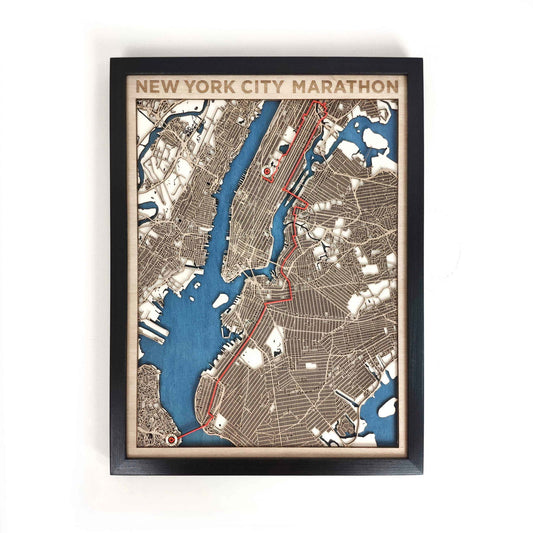
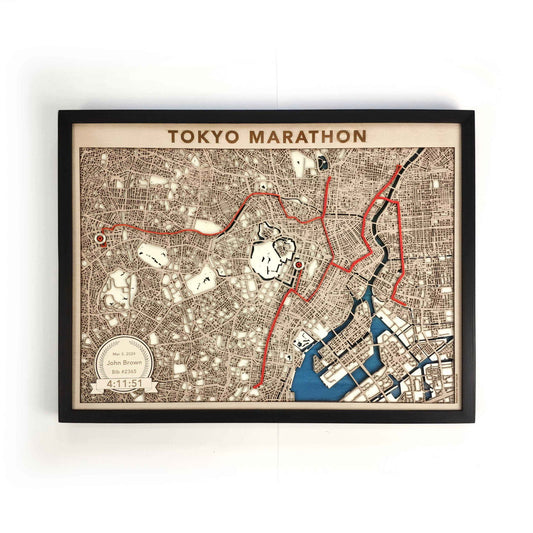
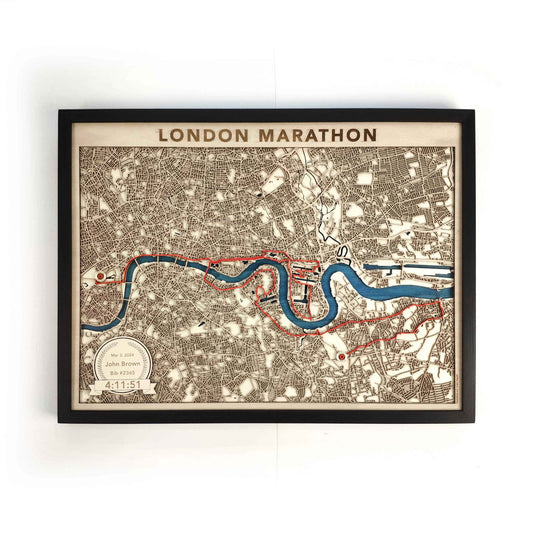
If you're looking for a unique gift idea for a runner who has conquered Chicago, a wooden map of the Chicago Marathon route makes for a truly memorable keepsake. It's a beautiful way to commemorate the race — a piece of wall art that captures every mile of the journey through the city's neighborhoods.
Quick Summary
Apply through the lottery each October — the most accessible entry path for most runners.
Meet the time qualifier standards for a guaranteed spot (fast times required on a certified course).
Run for charity if you miss the lottery — minimum fundraising of ~$1,500–$2,500 required.
Legacy status (5+ finishes in 10 years) or the Distance Series also offer guaranteed entry.
Entry costs $250 for U.S. residents and $260 for international runners. All fees are non-refundable.
The Chicago Marathon is open to all — not invite-only — with a minimum age of 16 and a 6:30 time limit.
The race is widely considered worth every penny: flat, fast, and unforgettable.