
Walk into any beautifully designed room and you'll immediately sense that something is right — the walls feel alive without being overwhelming, the space breathes, and every surface earns its place. But achieving that balance is rarely accidental. How many walls you decorate, and how you decorate them, may be the single most important decision in any interior design project.
Whether you're refreshing a living room, redesigning a bedroom, or styling a home office, the questions are always the same: should every wall have something on it? Is one feature wall enough? Can you overdo it? This guide answers all of that — and more.
How Many Walls in a Room Should Be Decorated?
There is no universal rule, but the most widely respected principle in interior design is the one-to-two wall guideline: in most rooms, decorating one or two walls intentionally produces the most balanced, visually comfortable result.
A single statement wall — often called a feature or accent wall — creates a clear focal point without competing with the rest of the space. Decorating two walls works beautifully in larger rooms or open-plan spaces, where a single wall might feel lost. Going beyond two walls is possible, but it requires significantly more restraint, skill, and cohesion to avoid visual chaos.
The key insight is this: decoration is most powerful when it contrasts with simplicity. A stunning piece of wall art or an elaborate gallery arrangement hits hardest when the surrounding walls give it room to breathe.
Should Every Wall in a Room Be Decorated?
Technically, yes — but not in the way most people think. Every wall in a room communicates something, whether it's bare, painted, textured, or adorned. The question isn't whether every wall should be "decorated" in a traditional sense, but whether every wall is being used intentionally.
A plain, well-painted wall in a rich colour is a design decision. A wall left deliberately bare to frame a window is a design decision. The mistake isn't leaving walls empty — it's leaving them empty without thinking about why.
That said, rooms where every wall is equally busy — covered in art, shelves, wallpaper, and mirrors all at once — tend to feel exhausting rather than expressive. The eye needs somewhere to rest. Give it that, and the decorated walls will reward you with far greater impact.
How Do You Decide Which Walls to Decorate in a Room?
The decision comes down to five practical considerations. Work through these and the answer usually reveals itself:
Every room has a wall the eye naturally travels to first — the one you face when you enter, or the wall behind a sofa, bed, or fireplace. This is almost always your primary decoration wall.
Walls with windows, doors, or built-in shelving are already "busy." These are usually best left undecorated or minimally styled, so they don't compete with structural elements.
Stand in the doorway. What do you see? The walls most visible from entry points and main seating areas have the most visual weight — and the most decorating potential.
Furniture, radiators, and light switches all reduce usable wall area. Map out clear, uninterrupted stretches of wall before committing to a placement plan.
Dark walls and busy arrangements absorb light. In rooms with limited natural light, keep decoration focused on one wall and let the others stay light and open.
Can Decorating Too Many Walls Make a Room Feel Cluttered?
Absolutely — and it's one of the most common interior design mistakes. When every wall competes for attention, the result is visual noise: a room that feels busy, smaller than it is, and oddly tiring to spend time in.
The problem isn't the number of walls decorated per se, but the lack of visual hierarchy. A room without hierarchy has no focal point, no moment of rest, and no sense of intentionality. It simply feels full.
The eye moves naturally through the room. There's a clear star — one wall or arrangement that draws attention — and supporting elements that complement without competing.
You struggle to know where to look first. The room feels smaller than its measurements. Guests mention it feels "busy" or you find it hard to relax in the space.
Gallery walls are beautiful but powerful. One gallery wall in a room is a statement. Two gallery walls in the same room is a collision.
Patterned wallpaper on all four walls of a small room dramatically shrinks the perceived space. Reserve bold wallpaper for a single accent wall for maximum effect.
Is It Better to Decorate One Feature Wall or Multiple Walls?
For most rooms — particularly bedrooms, living rooms, and dining rooms of average size — one strong feature wall outperforms multiple decorated walls in almost every measurable way: visual impact, perceived room size, and design coherence.
A single feature wall creates drama through contrast. It tells a clear visual story. It gives you permission to go bold — with colour, texture, large-format art, or an elaborate gallery arrangement — without the risk of overwhelming the space.
Multiple walls work well when the decoration is deliberately unified — a consistent colour palette, a repeating motif, or a deliberate design system that ties the walls together. Without that unifying thread, decorating multiple walls tends to fragment the room's visual identity rather than strengthen it.
The exception: very large rooms, loft spaces, and open-plan areas where a single wall can genuinely feel insufficient to anchor the space. In these cases, two complementary walls — one primary, one secondary — can create the layered, lived-in richness that makes a large room feel warm rather than cavernous.
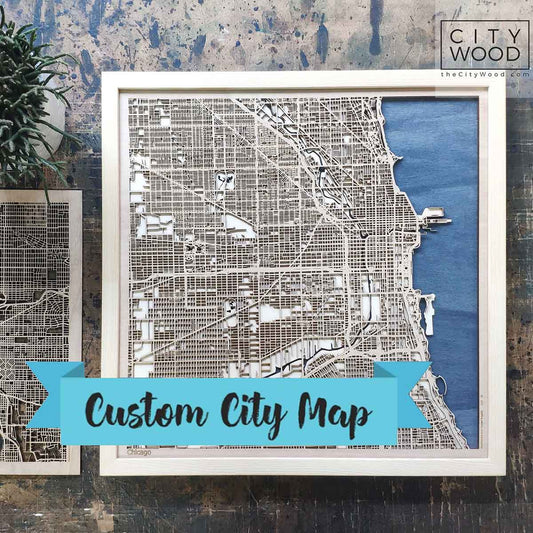
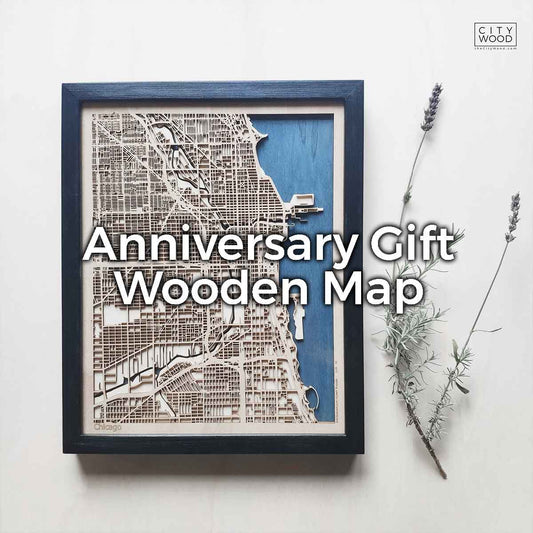
When it comes to choosing what to put on your feature wall, few objects make a statement quite like a personalized wooden map — a handcrafted, three-dimensional artwork that turns a meaningful place into a permanent piece of your home. Whether it marks the city where you grew up, the town where your family began, or a destination that changed your perspective, a wooden map transforms a blank wall into a story. It also makes an exceptional gift: thoughtful, lasting, and genuinely one of a kind — the kind of present that earns a place of honour on a wall for decades.
What Factors Influence How Many Walls You Should Decorate in a Room?
No two rooms are identical, and the right number of decorated walls depends on a combination of factors unique to your space. Here are the most important ones to consider:
- Room size. Smaller rooms benefit from restraint — one feature wall keeps the space feeling open. Larger rooms can support two decorated walls without feeling crowded.
- Ceiling height. Rooms with high ceilings can carry more vertical decoration without feeling oppressive. Low ceilings call for lighter, more minimal wall treatments.
- Natural light. Sun-drenched rooms forgive darker, busier wall arrangements. Rooms with limited light need open, pale walls to avoid feeling dim and enclosed.
- Room function. Bedrooms benefit from calming, minimal wall decoration to support rest. Living rooms and dining rooms invite more personality and visual interest.
- Existing furniture and colour. A room full of patterned upholstery, colourful rugs, and varied textures needs quieter walls. A room with neutral, simple furnishings can carry bolder wall decoration.
- Architectural character. Period homes with original cornicing, panelling, or fireplaces already have built-in wall interest. Modern minimalist spaces can absorb more deliberate decoration without losing their character.
- Personal style and intention. Maximalist interiors can carry more wall decoration when curated with consistency. Minimalist aesthetics are most powerful when wall decoration is rare, deliberate, and exceptional.
Ultimately, the number of walls you decorate is less important than the intention behind each choice. A single, perfectly considered wall arrangement — something that reflects who you are and what you love — will always outperform a room where every surface has been filled for the sake of filling it.
Decorate with purpose. Leave space for the eye to rest. And when you find something truly worth displaying, give it the wall — and the attention — it deserves.