
There is no wrong city, but there is a wrong way to choose one: picking whichever place comes to mind first instead of deciding what question you actually want the map to answer. "Where we met," "where we married," "where we live now," and "where everything changed" are four different questions, and they often point to four different cities. Start there, not with the map.
The four questions, and which one is yours
Where we met usually wins for couples early in the relationship, or when the meeting itself has a good story. Where we married is the natural choice when the wedding, not the beginning, is what you are marking. Where we live now fits best for a map that is meant to feel like "our life," not "our history." And where everything changed — a move, a new job, the city that turned things serious — is worth considering when none of the other three feels like the real answer. Most couples know which of these four questions matters most as soon as they see it written out separately, even if the cities themselves were not obvious a minute earlier.
When there is no single obvious city
Some people genuinely do not have one clear answer — a childhood spent moving constantly, a career that relocated you every few years, a relationship that has already spanned three or four cities. In that case, "where did we live longest" is usually the wrong tiebreaker. A better one: which city did you actively choose to be in, rather than simply end up in. People who moved often tend to describe home less as the place they are from and more as the place where they finally stopped moving on purpose — that is a stronger claim to the map than raw years lived.
When two cities both have a real claim
If you have gone through the questions above and two cities are still tied — met in one, married or settled in another — that is usually a sign you want a two-location map rather than forcing a choice. See Two-Location Maps: How to Show ‘Met’ and ‘Married’ on One Piece for how that works.
Sizing depends on the city, not just the wall
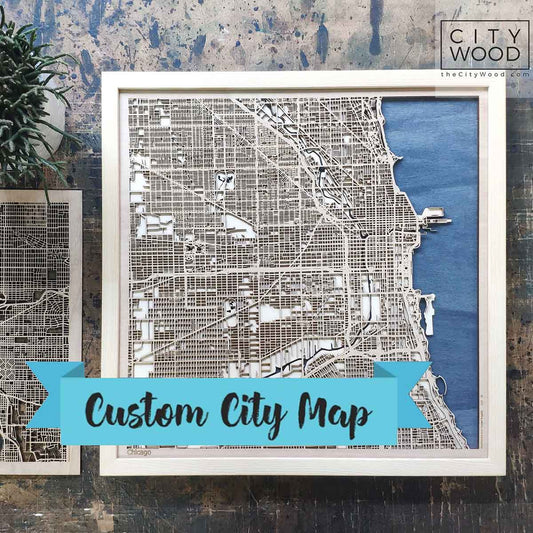
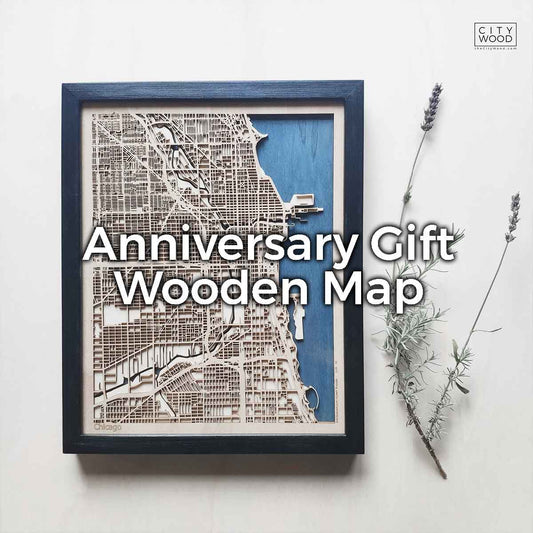
A dense downtown with a tight grid of streets reads well even at a smaller size, because the detail is naturally compact. A sprawling city, or one where the meaningful area covers more ground, needs a larger size to stay legible rather than turning into a blur of thin lines. As a rough guide: an 8"x8" or 11"x8" (starting at $219) suits a compact, walkable area with one or two markers; anything larger and more spread out, or with several marked locations, is usually better served at 14"x11" or above, up to the 34"x34" maximum, where the street detail has room to actually read.
FAQ
Does it have to be the city where we got married?
No. The wedding city is one valid answer among several — where you met, where you live now, or where you built your life together all work equally well.
What if we now live somewhere completely different from where our story started?
That is exactly the situation a two-location map is built for, or you can simply choose whichever of the two feels like the stronger answer to the four questions above.
Can it be a small town instead of a major city?
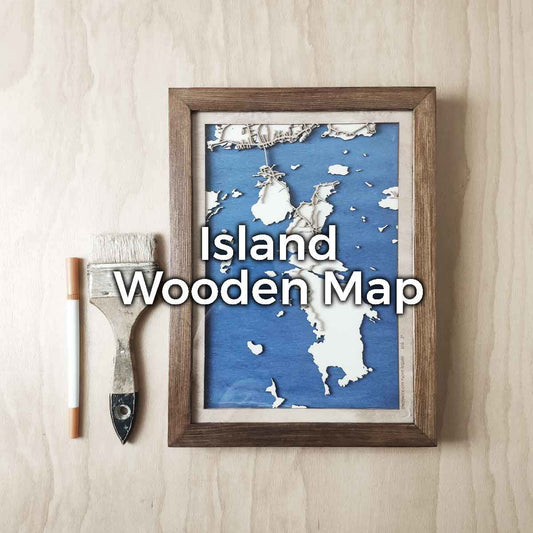
Yes. The map is built from real geodata for whatever place you choose, regardless of its size — a small town works as well as a major city, sometimes better, since the detail is naturally more intimate.
Can it be a region or coastline instead of a single city?
In most cases yes — tell us what area matters and we will confirm whether it translates well to a map at your chosen size.
Can we change our minds about the city after ordering?
Reach out as soon as possible. Changes are usually possible before production begins, but not once cutting has started.
Once you know which question your map is answering, the city usually answers itself. Start your commission and Hubert Roguski, architect and designer, will help confirm the right size for the place you choose.