
There's a certain kind of beauty that doesn't announce itself. It doesn't shimmer under gallery lighting or demand your attention from across the room. It simply exists, quietly, confidently, and with an air that suggests it has always been there. That's the essence of old money art style: a visual language built on restraint, heritage, and understated elegance.
What Is the Concept of Old Money Art?
Old money art is rooted in the aesthetic sensibilities of Europe's aristocratic and upper-class families, spanning roughly from the 17th to the early 20th century. Unlike "new money", which tends to display wealth loudly and conspicuously, old money art reflects a culture that has always had wealth, and therefore has no need to prove it.
The concept centers around inherited taste. Pieces were not bought to impress; they were collected across generations, displayed in manor houses and private libraries, and chosen for their craftsmanship, narrative, and longevity rather than their price tag or trend relevance. Think oil portraits of ancestors hanging in mahogany-paneled studies, antique maps framed behind thick glass, hand-bound leather books stacked beside bronze candlesticks.
In short, old money art is the art of people who buy for permanence, not spectacle.
What Makes Art Look Old Money?

Several visual and contextual cues make art feel distinctly "old money":
Age and patina. Art that shows the gentle wear of time, cracked paint, yellowed paper, oxidized bronze — carries an authenticity that cannot be manufactured overnight. The imperfections are the proof.
Narrative depth. Old money art tells stories: a hunting scene, a pastoral landscape, a detailed botanical illustration, a family coat of arms. Decoration alone is rarely enough; there must be meaning embedded in the work.
Classical subjects. Portraiture, still life, architectural drawings, equestrian scenes, maps, and natural history illustrations are all staples of the genre. These subjects connect the piece to centuries of tradition.
Craftsmanship over mass production. Hand-carved frames, hand-painted details, engraved metals, and hand-stitched textiles signal genuine skill and time investment — things that cannot be replicated by machines at scale.
Restraint in display. Old money interiors never overcrowd walls. A single large oil painting, a well-chosen sculpture, or a framed antique map placed deliberately in a room speaks louder than a gallery wall filled to capacity.
What Are the Key Colors in Old Money Art Style?
The old money palette is deliberately muted, warm, and drawn from the natural world. You won't find neon accents or high-contrast pops of color here. Instead, expect:
- Deep forest greens - evoking English gardens, hunting grounds, and velvet upholstery
- Burgundy and claret reds - rich, wine-dark tones associated with leather-bound books and Persian rugs
- Warm ochres and amber - the golden tones of aged oil paintings and candlelit interiors
- Ivory and parchment whites - the color of old paper, aged linen, and unbleached canvas
- Walnut and tobacco browns - warm, earthy tones that ground a space and suggest solidity
- Navy and slate blues - cool and measured, often seen in formal portraits and maritime art
- Aged gold - used sparingly in frames, lettering, and decorative accents; never brash, always burnished
These colors work together to create interiors and artworks that feel settled, as though they belong to a time before artificial light made everything too bright.
What Materials Are Used in Old Money Art?
Materials in old money aesthetics are always natural, durable, and associated with skilled craft. The most characteristic include:
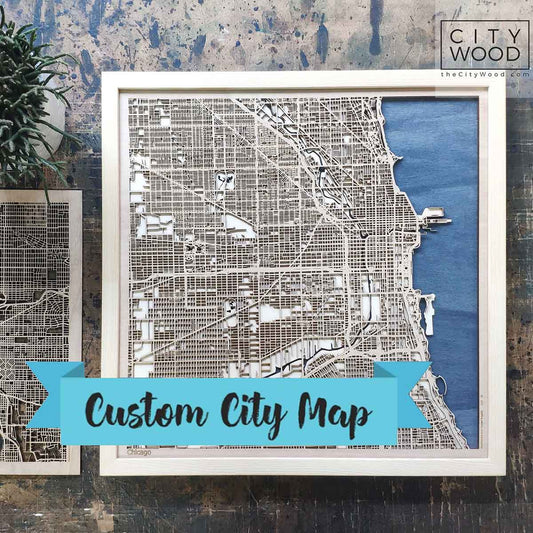
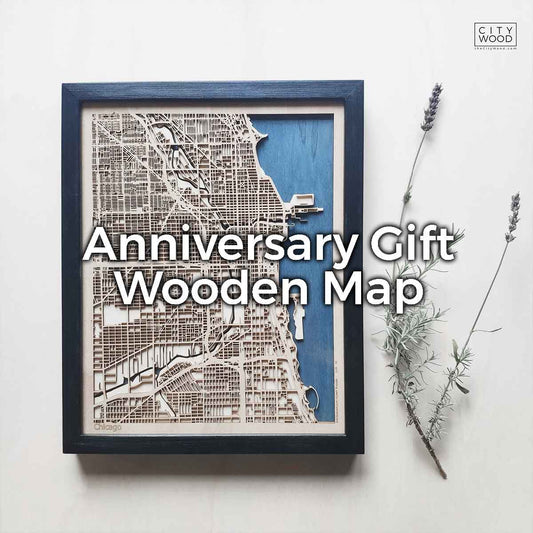
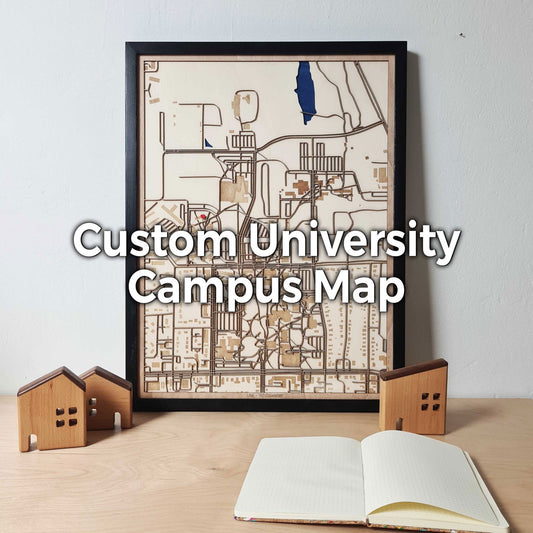
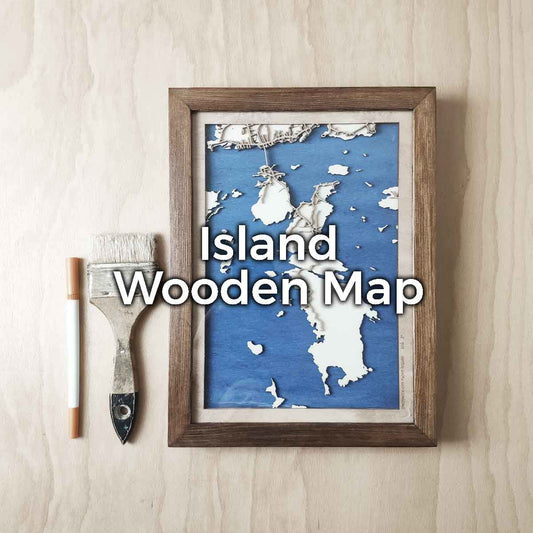
Wood - particularly hardwoods like walnut, oak, mahogany, and cherry. Wood is the backbone of old money interiors and art objects alike. A handmade wooden map, whether crafted as a decorative piece or a functional heirloom, fits naturally into this world, combining topographic detail with the warmth and grain of natural timber.
Oil on canvas - the definitive medium of classical portraiture and landscape painting, prized for its depth of color and longevity.
Bronze and brass - used in sculptures, candlesticks, and decorative hardware; materials that age beautifully and announce permanence.
Leather - dark and well-worn, appearing in bookbindings, desk surfaces, and frames.
Linen and silk - for textiles, upholstery, and the canvas grounds of fine paintings.
Stone and marble - sculptural materials that communicate timelessness and a connection to classical antiquity.
Gold leaf - applied to frames, gilded mirrors, and decorative lettering; used with discipline, never excess.
The common thread is that every material used in old money art was chosen because it would last, and because it came from the earth rather than a factory.
What Is the Opposite of Old Money Art Style?
The clearest counterpoint to old money art is new money maximalism — a style defined by novelty, visibility, and the overt display of wealth. Where old money whispers, new money shouts.
New money aesthetics tend to favor glossy surfaces, contemporary art that's more provocation than tradition, oversized brand logos, and pieces that are specifically chosen because of their price or current cultural cachet. The goal is recognition and admiration from outsiders, a social signal, not a personal inheritance.
More broadly, old money art also stands in contrast to:
- Minimalism - which shares the restraint but lacks the warmth, history, and ornamentation
- Maximalist eclecticism - too chaotic, too colorful, too immediate
- Fast decor and mass-market prints - disposable by nature, without craft or story
- Ultra-modern and industrial aesthetics - cold, functional, and disconnected from nature and tradition
If old money art asks "has this stood the test of time?", its opposite asks "is this trending right now?", and that distinction captures the entire philosophical divide.
Old money art style is ultimately a philosophy as much as an aesthetic. It prizes permanence over novelty, craftsmanship over convenience, and quiet confidence over loud display. The pieces that define this world, oil portraits, antique maps, hand-carved furniture, bronze sculptures, share a commitment to enduring quality that transcends any particular era or trend. Check our guide for old money interior style.
Understanding this style isn't about recreating a specific historical period. It's about applying the same values, depth, restraint, craftsmanship, and meaning, to the spaces and objects you choose to surround yourself with today.